How many days in Seville is enough?
Two full days covers the core, three does it properly. A day-by-day frame built around Seville's real clock, plus the two 2026 weeks that change everything.
 By Carmen Ruiz, Seville flamenco show specialist & cultural experience guide
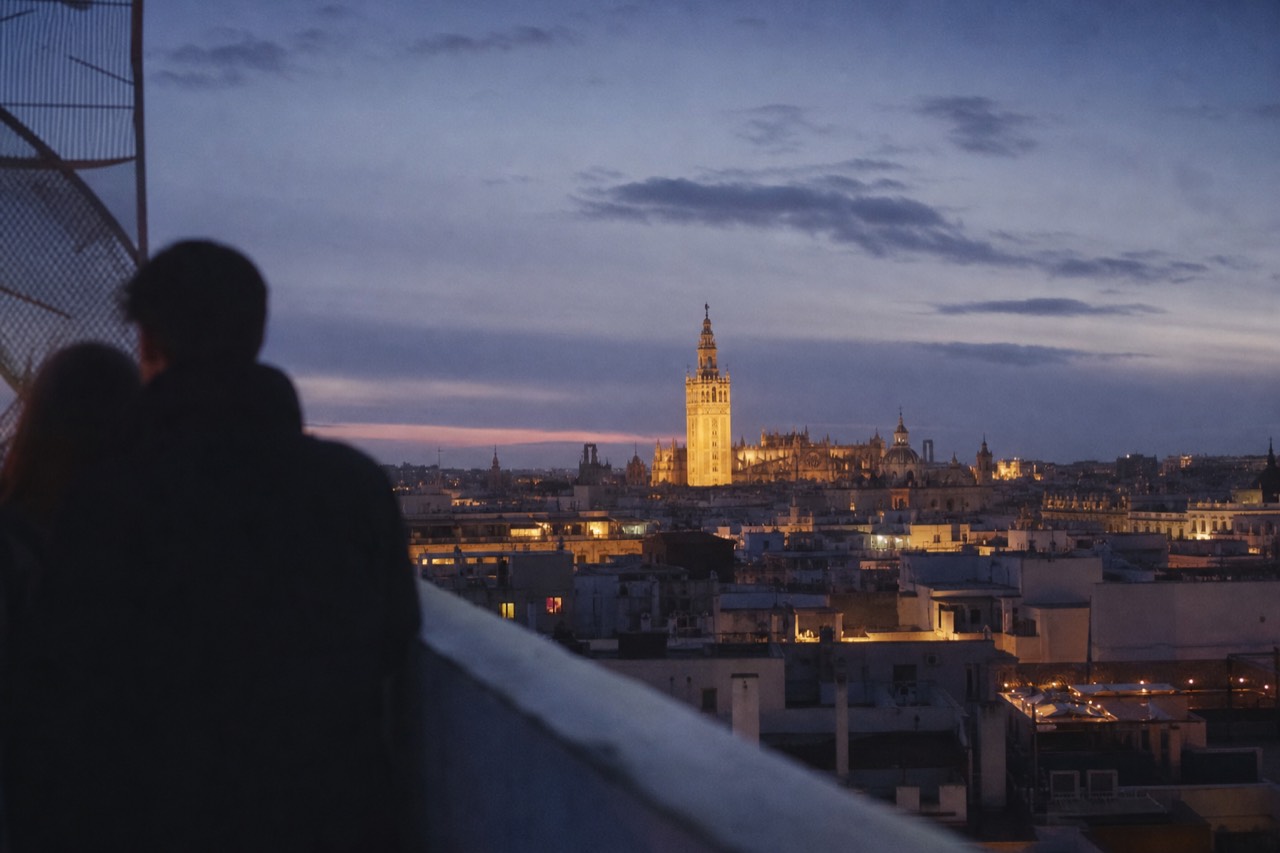
The distances in Seville are laughable. Cathedral to Alcázar is a two-minute walk, Alcázar to the river maybe ten, the river to Triana another five over the bridge. On a map the whole thing looks like an afternoon. What stretches it is the timetable: the monuments shut around six, the restaurant kitchens do not open until eight or half past, and the locals do not sit down until nine. Seville does not run out of sights. It runs out of usable hours.
How many days do most visitors actually need?
Two full days covers the headline sights without sprinting. Three is the number that lets Seville feel like a city rather than a checklist, adding Triana, a slow morning and a proper evening. Four only pays off if a day trip to Granada or Córdoba is on the table.
The reason two days works at all is compactness. Everything in the historic core sits inside a twenty-minute walk, so the transfer time that eats other city breaks barely exists here. The reason three days is better has nothing to do with covering more ground and everything to do with the split day. A Seville day is really two half-days with a dead zone in the middle: monuments and walking until roughly six, then a gap, then the evening. Two days gives you two evenings, and one of those will almost certainly go on eating rather than seeing anything.
Anyone arriving mid-afternoon on day one should count that as a half day, not a full one. Flights land, bags go to the room, and by the time anyone is out the door the Alcázar has stopped admitting visitors. The honest planning unit is full days on the ground, not nights booked.
Where you sleep decides how much of that walking radius you actually use, and Barrio Santa Cruz sits right inside it, a few minutes on foot from the cathedral, the Alcázar and most of the small flamenco rooms. Las Casas de la Judería rambles through a set of old houses in those lanes at the upscale end, while Hotel Murillo sits in the middle of the same quarter at the midrange one.
Las Casas de la Judería Check rates ›
Hotel Murillo Check rates ›
| Day | Morning | Afternoon | Evening |
|---|---|---|---|
| 1 | Alcázar at first entry, then the cathedral and bell tower | Santa Cruz on foot, Plaza de España around 6:00 pm | 7:00 or 7:30 pm show, dinner from 9:00 pm |
| 2 | Triana market and Calle Betis along the river | Metropol Parasol, Museo del Baile Flamenco before 6:00 pm | Tapas crawl on the local clock |
| 3 | Slow morning, one museum, no alarm | Day trip option, or the river and the parks | Second show or a dinner-and-show package |
What actually fits into day one?
Day one belongs to the monuments in the morning and a show in the evening. Alcázar at opening, cathedral after, Santa Cruz on foot in the afternoon, then a 7:00 or 7:30 pm curtain that puts you at a restaurant table exactly when the city starts eating at nine.
Front-loading the monuments is not just about queues. It is about heat for most of the year, and about the fact that a first-time visitor's energy runs down through the afternoon. The Alcázar and the cathedral both reward attention, and attention is the first thing to go after a long lunch.
The evening half is where day one earns its place. Seville's rooms run from around 6:00 pm to 10:30 pm, and the busiest, most-booked window sits between 7:00 and 8:30 pm. A show at that hour means dinner afterwards rather than instead, which is the correct order in a city where nobody eats before nine. If the idea of coordinating a bar crawl and a show on a first night sounds like work, a four-hour tapas tour that starts at the Monumento al Arte Flamenco in Triana and finishes in a show seat handles both, and you can check dates and current prices before committing the night.
What should day two look like?
Cross the river. Day two is Triana in the morning, the market and Calle Betis along the water, then back through the centre for Plaza de España or the Metropol Parasol in the late afternoon, and a slower evening built around tapas rather than a fixed curtain time.
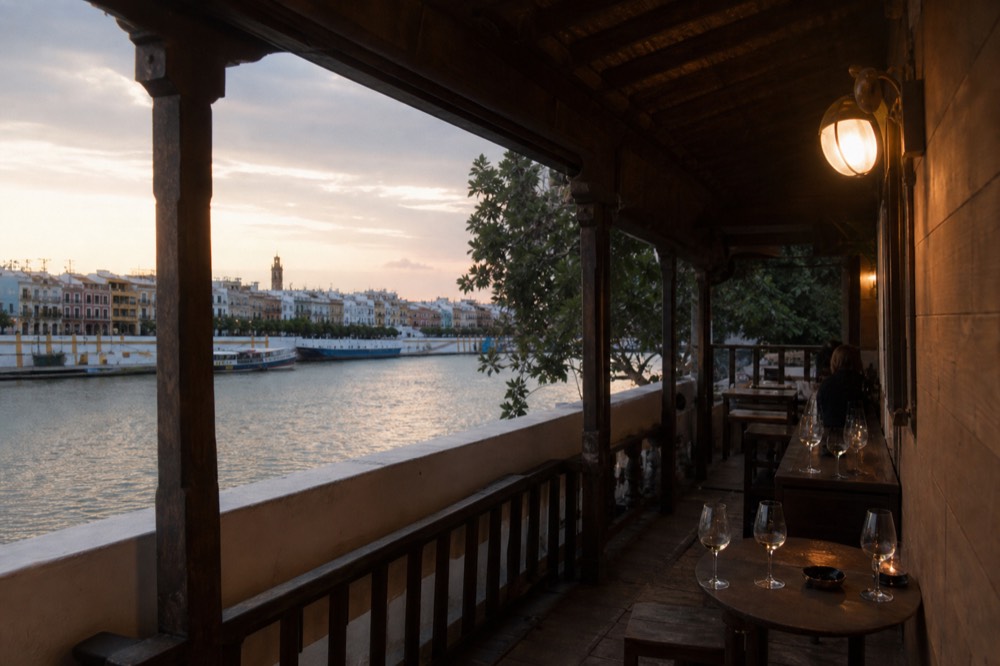
Triana is the part of Seville most two-day itineraries drop, and it is the part that changes how the city reads. It is a working quarter with ceramics workshops, a covered market and its own flamenco lineage: the Monumento al Arte Flamenco stands on that side of the river, and several of the city's small rooms sit within a few streets of it. Calle Betis carries the riverfront view back towards the tower, best walked in the last hour of light.
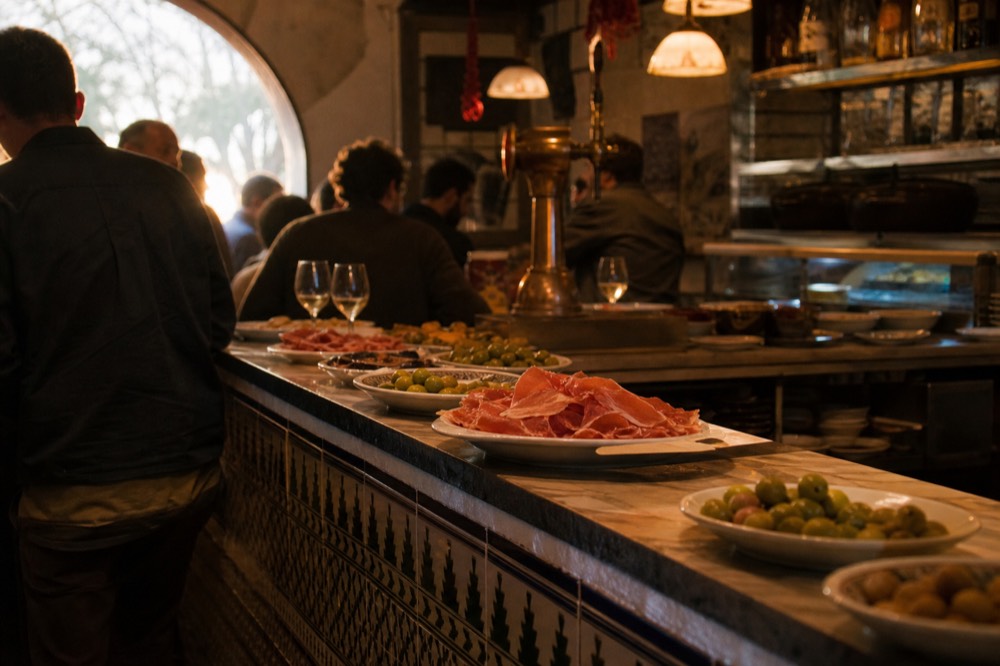
The evening on day two can afford to be looser because day one already banked the show. Tapas here run roughly €3 to €5 a dish and a menú del día sits around €13 to €17, so a night of grazing across three or four bars stays cheap by European city standards. Seville also charges no city tourist tax, which quietly helps a three-night budget.
If a second show is tempting, and for a lot of people it is once they have seen one, Triana's own riverside room on Calle Betis runs an hour with a guitarist, a singer and two dancers with a drink included, and the listing shows current availability. The neighbourhood case is made properly in why Triana matters to flamenco.
Is a third day worth adding?
Yes, for one of two reasons: a day trip, or nothing at all. Granada is about 2.5 hours away on the fastest direct trains, with buses at roughly 3 to 3.25 hours. The alternative use of day three is a morning with no alarm, which Seville rewards more than most cities.
The Granada question comes up constantly because of the Alhambra and because Granada has its own flamenco tradition, the zambra of Sacromonte, performed in cave settings in the old Gitano quarter. Local prices there generally run €20 to €50 depending on venue and inclusions. It is a genuinely different experience from a Seville tablao: rawer, more atmospheric, harder to reach and harder to book well. The comparison is worked through in Seville or Granada for flamenco.
Doing it as a day trip is a long day. Two and a half hours each way on the train, plus timed Alhambra entry, leaves a narrow window in the middle. Córdoba is the softer version of the same idea, much closer to Seville and compact enough that the Mezquita and the old Jewish quarter fit into an unhurried day, so check the day trip here if day three wants a change of city without a five-hour rail bill. Anyone unwilling to spend that long on trains should take the other option: a third day inside Seville buys the parks, a second neighbourhood, and the ability to sit somewhere for two hours without checking a watch. That is not filler. It is most of what people remember.
How do Seville's meal times change the plan?
Heavily. Restaurants open around 8:00 to 8:30 pm and locals rarely dine before 9:00 pm, with the busiest stretch running to 11:00 pm. Any itinerary written on a northern European or American clock will collide with that, usually by scheduling a show at the exact hour the good tables free up.
The workable pattern is simple: something cultural between six and eight, dinner from nine, bars after. That is why the 7:00 pm and 7:30 pm show slots sell out first across the city, and why the 6:00 pm slots suit families and the 10:30 pm slots suit people who ate early. For an early curtain the unamplified hour at Casa de la Memoria is the one most travellers single out, and the listing shows which slots are still open on a given date.
Getting around does not constrain the evening much. The metro runs until roughly 11:00 pm Monday to Thursday and later at weekends, to around 2:00 am on Fridays and Saturdays, and the tram runs a little later again. Taxis and app cars operate 24 hours, and the city's own metropolitan transport pages carry the current timetables. From the airport, the official taxi fare into the centre is a fixed €26 on weekdays between 7:00 am and 9:00 pm, and €29 at night, at weekends and on holidays.
Which weeks should you avoid or target in 2026?
Two weeks reshape the city. Semana Santa runs 29 March to 5 April 2026 and Feria de Abril runs 21 to 26 April 2026. Both are extraordinary and both make a short first visit harder: streets close, prices climb, and a two-day plan stops behaving like a two-day plan.
Feria opens with the traditional cena de pescaito on the evening of the 20th, the lights go up at midnight, and fireworks close it at midnight on the 26th. Semana Santa fills the old town with processions that cut walking routes without warning. Neither is a reason to stay away, but both are a reason to add a day.
| Period | What is happening | What it does to your days |
|---|---|---|
| January | Average 10.9°C, highs 16.0°C, lows 5.7°C | Quiet monuments, indoor evenings, short daylight |
| 29 Mar to 5 Apr 2026 | Semana Santa | Processions close streets, city at capacity |
| 21 to 26 Apr 2026 | Feria de Abril | Lights at midnight on the 20th, fireworks on the 26th |
| May to June | Mild evenings | The best window for outdoor dining and walking |
| July to August | July averages 28.2°C with highs near 36.0°C; 2025 saw 30+ days above 40°C | Mornings and evenings only, indoors in between |
| September 2026 | XXIV Bienal de Flamenco, days not yet announced | Heat easing, the city's biggest flamenco event on |
| October | Mild again | The other best window, with thinner crowds |
Those temperature figures come from the Spanish met office long-term normals for the Seville airport station, and AEMET publishes the full record month by month if a specific week needs checking.
September 2026 is the one to target rather than avoid if flamenco is the reason for the trip, because the Bienal brings a scale of programming the regular calendar does not, and the details sit in the Bienal's September 2026 programme.
So what is the right number of days for a first visit?
Three full days on the ground, with two evenings committed in advance. Two days works if the arrival is early and the plan is disciplined. Four days only makes sense with a day trip attached, and a single day forces a straight choice between the daytime city and the nighttime one.
The mistake worth avoiding is treating nights booked as days available. Three nights with a late arrival and an early departure is really one and a half days, which is not enough for Seville even at its most walkable. Count the mornings.
The second mistake is leaving the evening to chance. Show seats are the only part of a Seville itinerary that genuinely runs out, especially in the 7:00 to 8:30 pm band, and the dinner-and-show packages across the dinner and show options go earlier again at weekends. Everything cancels free up to 24 hours out, so booking early costs nothing and protects the one part of the trip that cannot be rescheduled. The case for putting it first is laid out in the number one thing to do here, and the shortlist of what else earns a slot is in what you should not miss.