Is flamenco Arabic or Gypsy?
Neither answer alone holds up. Flamenco took shape in Gitano communities in Andalusia over Arab-Andalusian, Sephardic and folk layers. What the evidence says.
 By Carmen Ruiz, Seville flamenco show specialist & cultural experience guide
Two guides on the same street will give you opposite answers within an hour. One says flamenco is Moorish, pointing at the modal wail in the singing. The other says it is Gitano, full stop, and that everything else is decoration added by outsiders. Both are arguing from something real, and both are describing a piece of a mix that musicologists have been separating out for decades without arriving at a single origin.
Is flamenco Arabic or Gitano?
It is primarily Gitano in formation and multi-cultural in material. The art developed within Gitano (Romani) communities in Andalusia from the fifteenth century onward, drawing on Romani musical traditions, local Andalusian folk forms, the Arab-Andalusian music of Al-Andalus and Sephardic Jewish influences. The recent consensus emphasises fusion, not one root.
The reason the question stays open is that the formative period left almost no notation and very few documents. What survives is the music itself, family transmission, and the written record of the communities involved. Encyclopedic summaries of flamenco's origins and influences present it as a hybrid: Romani contributions to the core styles and to professionalisation, layered over the Andalusi tradition and older Spanish forms already carrying Arabian Peninsula, North African and Sephardic features.
| Strand | Period | What it contributed | How settled the evidence is |
|---|---|---|---|
| Gitano (Romani) communities | Fifteenth century onward | The formation of the core styles, the transmission line, and later professionalisation | Strongly supported and central to most accounts |
| Romani migration from India | Earlier, carried into Spain | Scales and rhythmic ideas of North Indian origin | Widely described, details still argued |
| Arab-Andalusian music of Al-Andalus | Eighth to fifteenth centuries | The nubah tradition and modal colour beneath the singing | Supported as a layer, contested in the specifics |
| Sephardic Jewish tradition | Medieval Iberia | Vocal and melodic features inside the mix | Present in the literature, least firmly documented |
| Andalusian folk song | Pre-existing base | The local repertoire the rest was grafted onto | Uncontroversial |
Read the table as a stack, not a contest. Nothing in it says one strand won.
What did Gitano communities contribute?
The shape of the art. Flamenco as a recognisable form took hold inside Gitano families in Andalusia, who developed the core palos, carried them by ear across generations and turned them into professional performance. Romani migration also brought musical ideas traced to North Indian scales and rhythms, which is the deepest layer visitors rarely hear about.
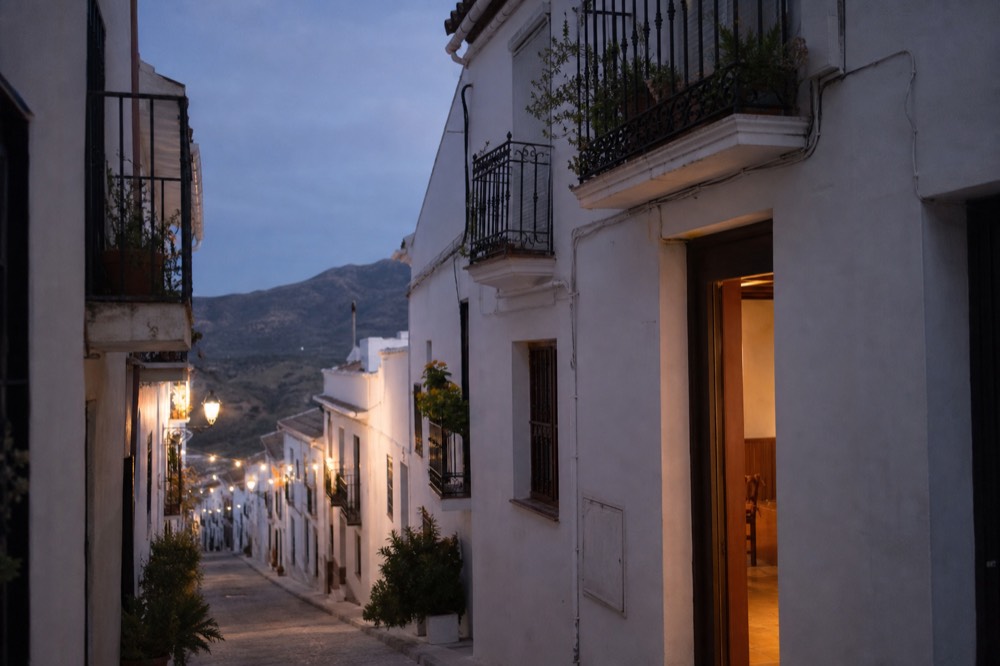
Transmission is the part that matters most and gets discussed least. These forms were not taught from scores. They passed inside households, at parties, between cousins, which is why the family names in flamenco read like a genealogy and why the deepest repertoire clustered in particular districts rather than spreading evenly across Spain. Triana on the far bank of the Guadalquivir is one of those districts.
That history also explains why the origins question carries so much heat. Assigning flamenco to a general Spanish or general Moorish past quietly removes the community that built it, a community the Spanish state spent the eighteenth century trying to dissolve through the Pragmatica laws and the 1749 round-up. The ban story and what is actually documented sets out that record, and it is the reason careful writers say Gitano first and fusion second, rather than the other way round.
What survives from Al-Andalus?
Chiefly the modal sound and the deep-song sensibility. Al-Andalus, roughly the eighth to fifteenth centuries in Iberia, produced the Andalusi nubah tradition that scholars describe as one of the layers under flamenco singing. The strongest evidence is musical rather than documentary, which is why the Moorish claim is real but keeps getting overstated.
Cante jondo, the deep song category, is where the argument usually lands: modal, ornamented, often sorrowful, resolving in ways that sit outside common European harmony. That colour is what makes a first-time listener reach for the word Arabic. The complication is that Andalusian folk song had already absorbed centuries of contact before flamenco existed, so the influence arrives second-hand as often as it arrives directly.
The same caution applies to the word ole. A long-standing theory derives it from the Arabic wa-Allah, and other proposals point at Greek, Hebrew or ordinary Spanish evolution, with no version accepted across the board. What the audience shouts and why takes that dispute apart properly. Treating an unresolved etymology as the proof of a whole origin story is how a plausible layer turns into a slogan.
| Form | Rhythmic cycle | Character | Note |
|---|---|---|---|
| Cante jondo | Varies by palo | The most intense singing category, modal and often sorrowful | The centre of the Moorish-influence argument |
| Solea | 12 beats | Slow, profound, weighty | A pillar of the deep-song repertoire |
| Bulerias | 12 beats | Fast, festive, improvisational | The most openly playful form in a tablao hour |
| Alegrias | 12 beats | Joyful, often in major mode | Carries its geography: associated with Cadiz |
| Farruca | Often four-beat | Dramatic, slower, narrative | Traditionally performed by men |
Where do the Sephardic and Andalusian folk layers fit?
Underneath, and less visibly. Sephardic Jewish musical traditions are named in the scholarship as part of the mix, though they are the least firmly documented strand. Local Andalusian folk song is the base everything else was grafted onto, which is why regional song forms and flamenco palos share so much melodic and rhythmic material.
The Sephardic thread is where honest writing gets uncomfortable, because it is real enough to name and thin enough that nobody should build a lecture on it. Recent summaries of the musicology keep returning to a multi-cultural fusion rather than a hierarchy of contributors, and discussion of the Jewish contribution has been active again over the past couple of years without producing a settled verdict.
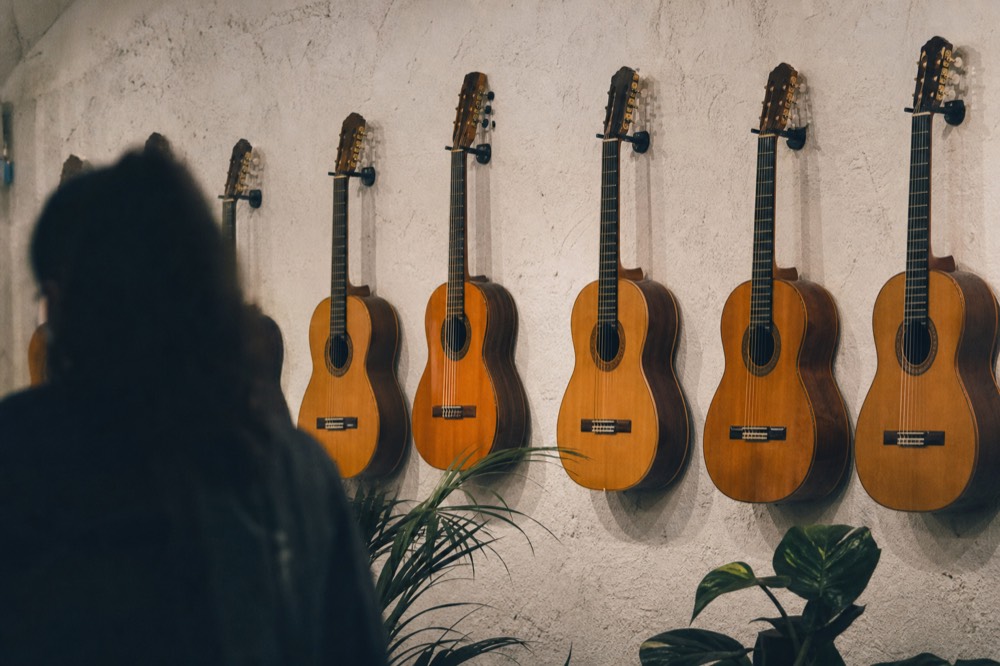
The folk layer is the easiest to underrate. Andalusia had its own singing before any of this, and flamenco kept borrowing from it long after the form existed. Palos named for places make the point without argument: alegrías carries the identity of Cádiz in its name and its brightness. If the guitar side of the story interests you more than the singing, Casa de la Guitarra keeps a historic instrument collection on the walls of a small Santa Cruz room and runs an hour in front of it, and you can check tonight's start times and the current price if that pairing appeals.
Why does the origin question get so heated?
Because origin equals ownership. Calling flamenco Arabic hands its identity to Al-Andalus. Calling it simply Spanish erases the Gitano families who built it under state pressure. Calling it purely Gitano understates the material that came from everywhere else in Andalusia. Every simple answer takes something away from somebody.
There is also a commercial layer. A single dramatic origin makes a better tour script than a stack of overlapping influences, and it sells better on a poster, so the simplifications have money behind them. That is not a conspiracy. It is what happens to complicated history when it gets sold nightly to visitors who have one hour and no background.
The vocabulary you will hear at a venue carries the same mixed inheritance, and knowing four words takes the argument out of the abstract. Toque is the guitar side, baile the dance, cante the singing, and duende the word artists use for the state where a performance stops being technique and starts being something else. Two more turn up in stage introductions: zapateado for the driving footwork, and bata de cola for the long-trained dress a dancer manages with her feet while she works.
The workable answer for a traveller is to hold both halves. Say Gitano when you mean who made it, say Andalusian fusion when you mean what it is made of, and treat any guide who hands you a one-word origin with polite suspicion.
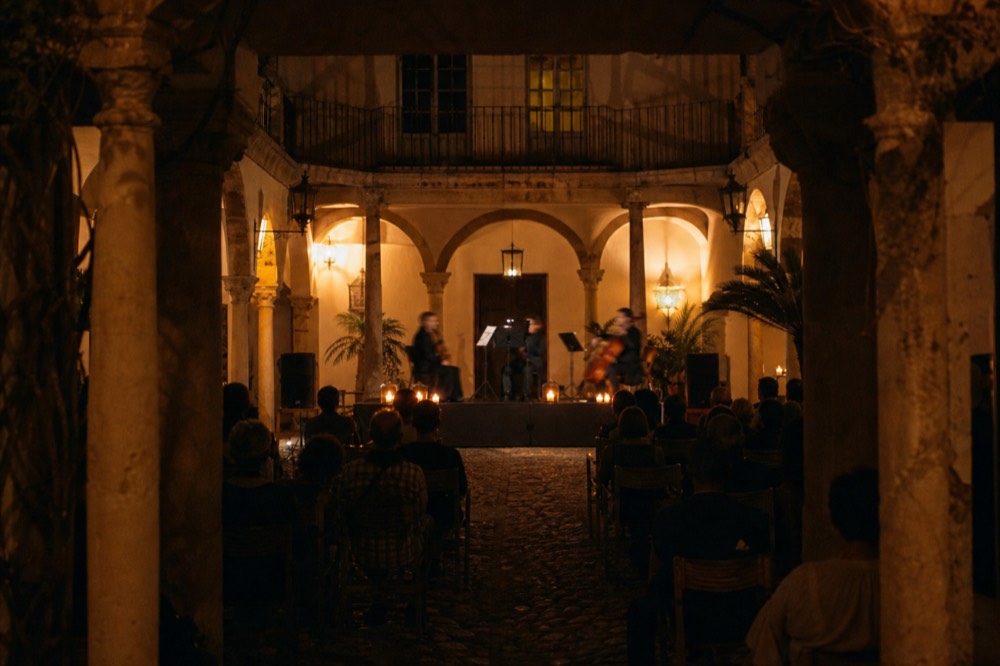
If you want the layered version in one evening, the Dance Museum sells the two halves as a pair: the courtyard show under Cristina Hoyos's direction, plus the collection upstairs on the history it comes from. Seating there is first come, so check the current times and prices and plan the museum visit for before the curtain.
Where in Seville can you stand inside that history?
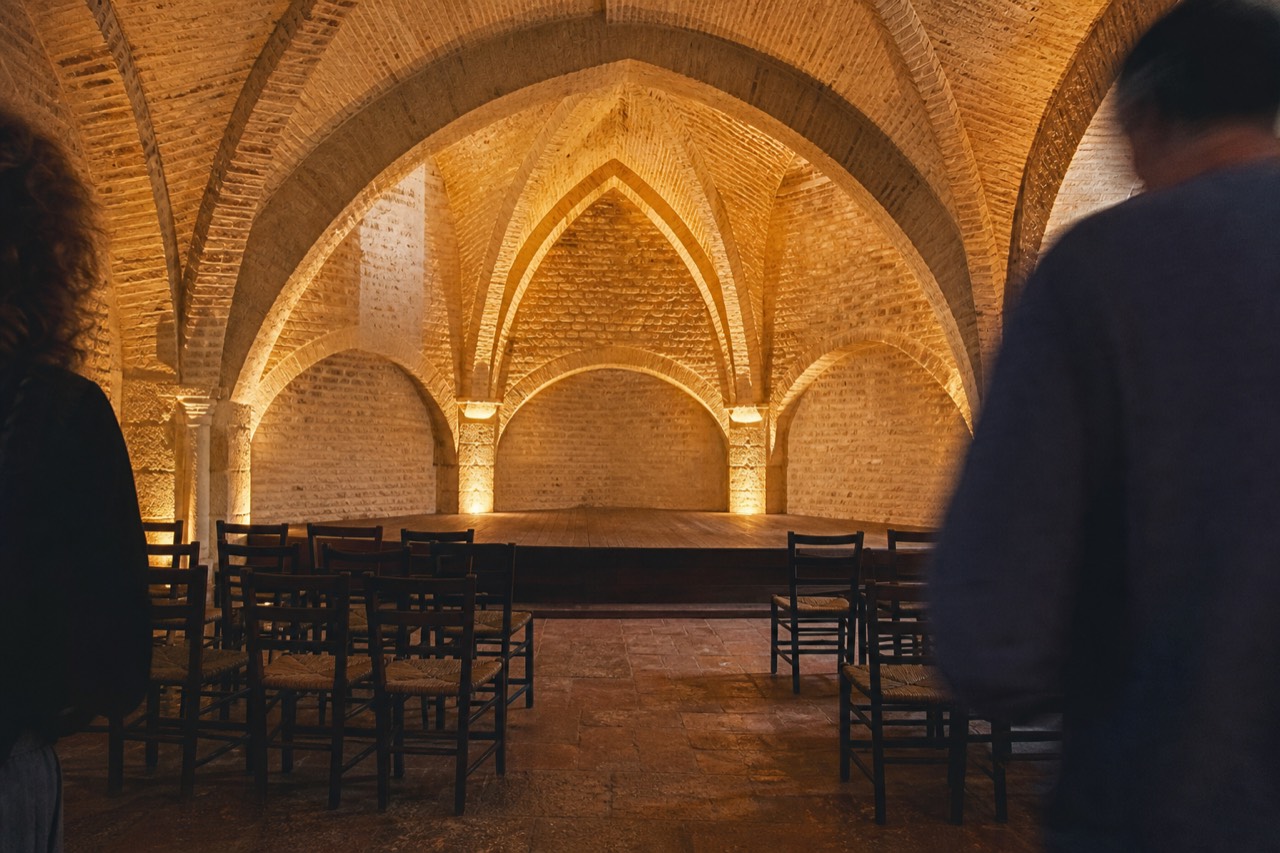
In the buildings. Flamenco Dreams plays a twelfth-century Almohad vault beneath the Dance Museum, so the Moorish layer of the story is literally the ceiling. Puro Flamenco performs in the museum's eighteenth-century courtyard on a Roman temple footprint. Both put the architecture and the art in the same room, which no theater stage can do.
The vault is the more unusual booking of the two. It seats two rows, includes a drink and the museum visit, and is not open to under-tens, which tells you how small and how quiet the space is. Rooms that size sell out on ordinary weeknights, so check which dates still have seats as soon as your evenings are fixed rather than the afternoon of the show.
Puro Flamenco is the steadier choice, with choreography under Cristina Hoyos's direction, first-come seating and a recommendation to arrive half an hour early. Museum entry can be added, and since the museum closes around six, the visit works best before an evening curtain rather than after it. The museum's shows explained in full covers the timing, and the wider museum and theater programmes sit together on one page.
The daylight version of the same layer is the Real Alcázar, whose Mudéjar palace was built in the Moorish idiom for a Christian king, which is the fusion argument worked in plaster and tile rather than in sound. Entry runs on timed slots, so book the timed slot here if you want both halves of the story in one day.
None of these rooms settles the scholarly argument, and none of them should claim to. What they do is put you close enough to hear which parts of the sound feel Andalusi, which feel Romani and which are simply this city's own. The UNESCO record on flamenco as intangible heritage frames it the same way, as a living expression carried by communities rather than a museum object with a single label. If you would rather start from a straight ranking of rooms than from history, the ranked comparison of the city's venues does that job.