What do they yell during flamenco?
Ole, agua, arsa, eso es: what the shouting at a flamenco performance means, where ole might come from, and why clapping along is the thing visitors get wrong.
 By Carmen Ruiz, Seville flamenco show specialist & cultural experience guide
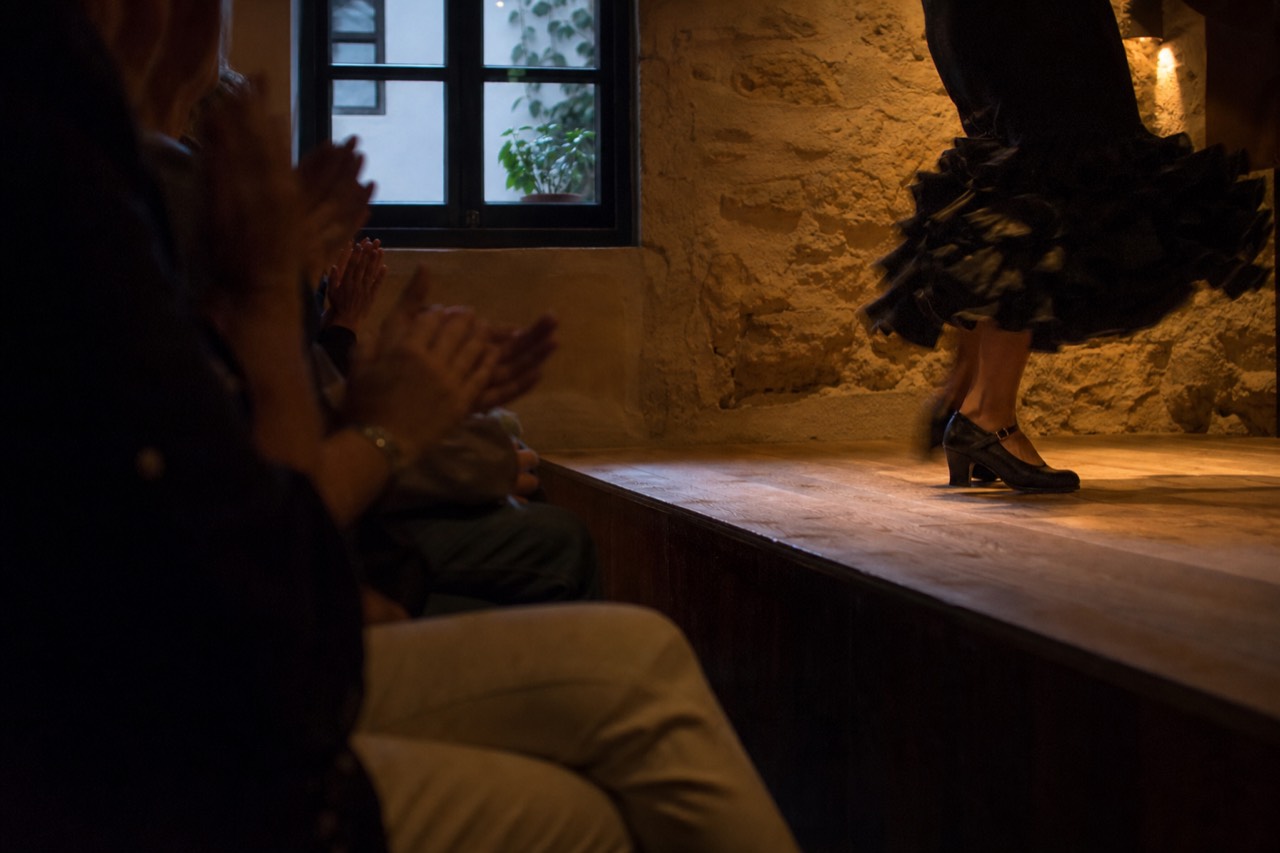
About twenty minutes into most tablao hours, a guitarist will say something short and rough over his own playing and the singer beside him will answer it. Nobody translates. Visitors tend to assume it is enthusiasm boiling over, or worse, a bit of theatre added for them. It is neither. Jaleo is a technical layer of the performance, and knowing what the words do turns an hour of watching into an hour of following.
What are they actually shouting?
Mostly jaleo: short encouragements thrown at whoever is carrying the moment. Ole is the general marker of something well done. Agua, literally water, cools a passage running hot. Arsa and vamos push the dancer onward. Eso es means that is it, exactly that, and lands as approval of a specific choice.
The words come from artists first. Singers, guitarists and palmeros shout at each other constantly, because a flamenco set is improvised inside a fixed rhythmic frame and the performers are telling one another what is working. A shout can function as a cue, a compliment, or a dare to go further. Audiences borrowed the vocabulary, and in Andalusian rooms with local regulars in them the borrowing is skilled.
| Shout | Literal sense | What it signals | When it tends to land |
|---|---|---|---|
| Ole | No plain translation | Broad approval of something executed well | After a completed phrase, a turn, a held note |
| Agua | Water | Cooling something burning hot | In the middle of an intense passage, often from the stage |
| Arsa | Untranslatable exclamation | Push, lift, keep going | Under a building footwork section |
| Eso es | That is it | Approval of one exact choice | Immediately after the choice, never a beat late |
| Vamos | Let us go | Encouragement to drive forward | At a change of gear, before a fast close |
Two habits separate the people who know from the people copying. The first is economy: experienced audiences shout rarely, so the shout means something when it comes. The second is placement, which sits on the compás, the rhythmic cycle that organises most palos in twelve beats. A shout on the wrong beat is not just mistimed, it fights the count the dancer is standing inside.
What does ole mean, and where does it come from?
Ole works as an exclamation of approval rather than a word with a dictionary meaning. Its origin is genuinely disputed. One long-standing theory traces it to the Arabic wa-Allah, used in poetic recitation during Al-Andalus. Other proposals point to Greek, Hebrew or ordinary Spanish evolution. No version has settled the argument.
The Arabic theory is repeated so often on tours that it now sounds like established fact, and it is not. Scholars note that it is not universally accepted, and the competing derivations have not been ruled out either. The honest position is that a very old exclamation has an unrecoverable paper trail, which is what usually happens to words that lived in speech for centuries before anyone wrote them down. Encyclopedic summaries of flamenco's contested origins set the theories side by side rather than picking one.
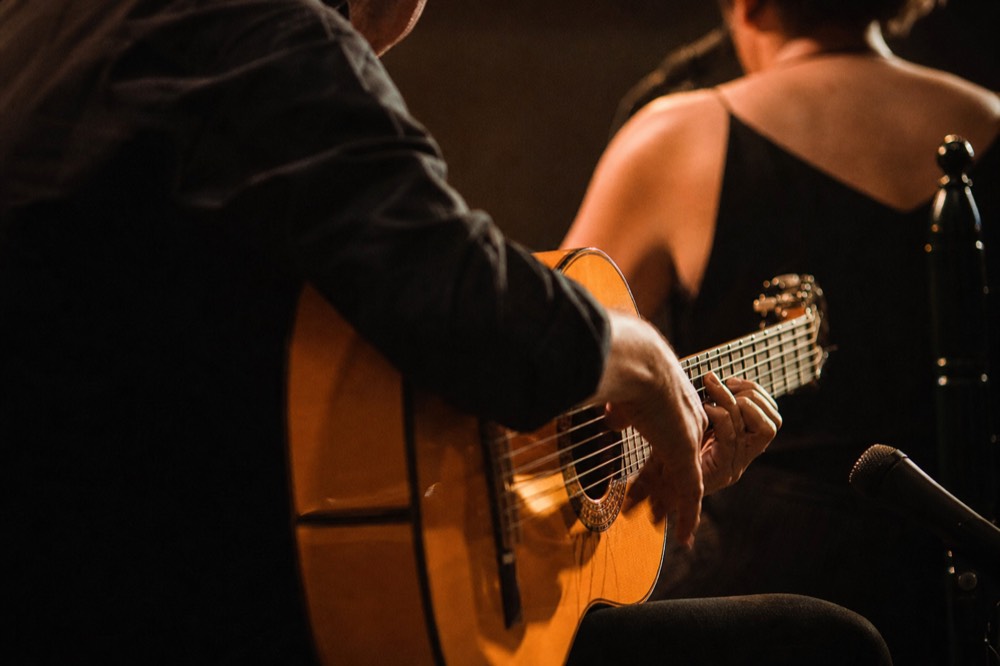
What is not disputed is that ole belongs to a wider Andalusian performance culture, not only to flamenco, and that its force depends entirely on timing. Said flatly at the wrong moment it is a tourist noise. Said late, low and once, after a dancer lands a phrase, it is the correct response. The same argument about where things came from runs under the whole art form, and the case for Arabic and Gitano roots is worth reading before repeating anything you hear from a stage introduction.
When does a shout land, and when does it wreck the moment?
Late, quiet and rare works. Early, loud and repeated does not. Flamenco builds tension by delaying resolution, so a shout thrown into a silence the artist created is a shout that erases the effect. The safest rule for a visitor is to react after something finishes, never during the approach to it.
Cante jondo, the deep song at the centre of the repertoire, depends on those silences. A singer will stop mid-phrase and let a room hold nothing at all for two or three seconds. Regulars sit through it. In a small unamplified room the temptation to fill that gap is strong, because silence in a crowd feels like an obligation, and filling it is the single most common visitor mistake after mistimed clapping.
The other timing trap is the false ending. Many palos close with a sequence that sounds final more than once before it actually is. Applaud on the first fake close and you will be applauding alone while the dancer continues. Watching the palmeros solves it: their hands stop when the piece stops, and they know.
Rooms differ in how much noise they can absorb. A theater production with six performers and a sound system has room for a stray shout. A courtyard with five artists and no microphones does not. If the acoustic version appeals, La Casa del Flamenco runs its hour in a fifteenth-century Santa Cruz courtyard with doors opening twenty minutes ahead, and it is worth checking which start times are still open when you plan the evening.
Should you clap along with the palmas?
Almost never. Palmas are played, not applauded: professional palmeros hold the compás, mark the accents and switch between sharp and muffled hand sounds as a percussion part. Etiquette guidance through 2025 and 2026 is consistent in telling audiences at formal tablaos and theaters to keep their hands still during the piece.
The reason is practical rather than snobbish. A dancer counts against the palmas. Twenty audience members clapping a straight four over a twelve-beat cycle puts a competing pulse into the room, and the people on stage have to work through it. Nobody will stop the show to correct you, which is exactly why the mistake survives: visitors get no feedback and assume it was welcome. The reliable cure is to be taught the count with your own hands before you ever sit down in a tablao, which a beginner class does in an hour, and you can book a class here as a separate booking from the show.
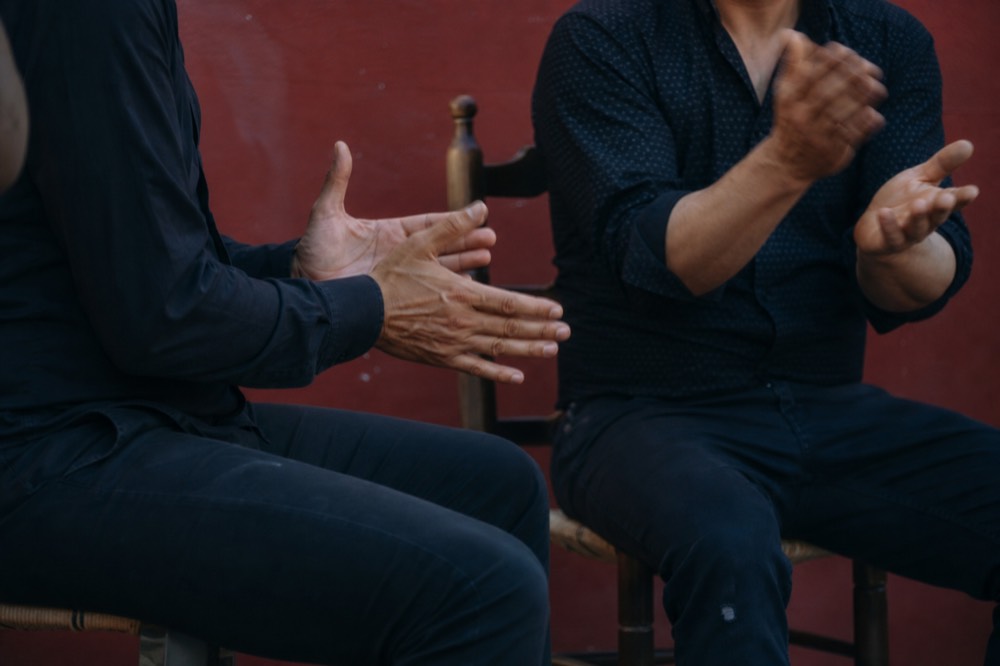
There is a narrow exception. If a room wants the audience in on a closing number, the invitation is explicit and impossible to miss. Until somebody on stage asks, the answer is no. The same restraint applies to photography, which varies more than clapping does: Teatro Flamenco Triana runs a strict no-photos hour, while other rooms allow images between numbers. The room's unwritten dress code covers the rest of the etiquette questions people ask at the door.
What should a first-timer actually do?
Listen for the first two numbers and shout nothing. Watch the palmeros for where the beat sits and where pieces genuinely end. React after phrases, not during them. Copy the room rather than the internet. If a local three seats away says nothing for ten minutes, that is the correct volume for the night.
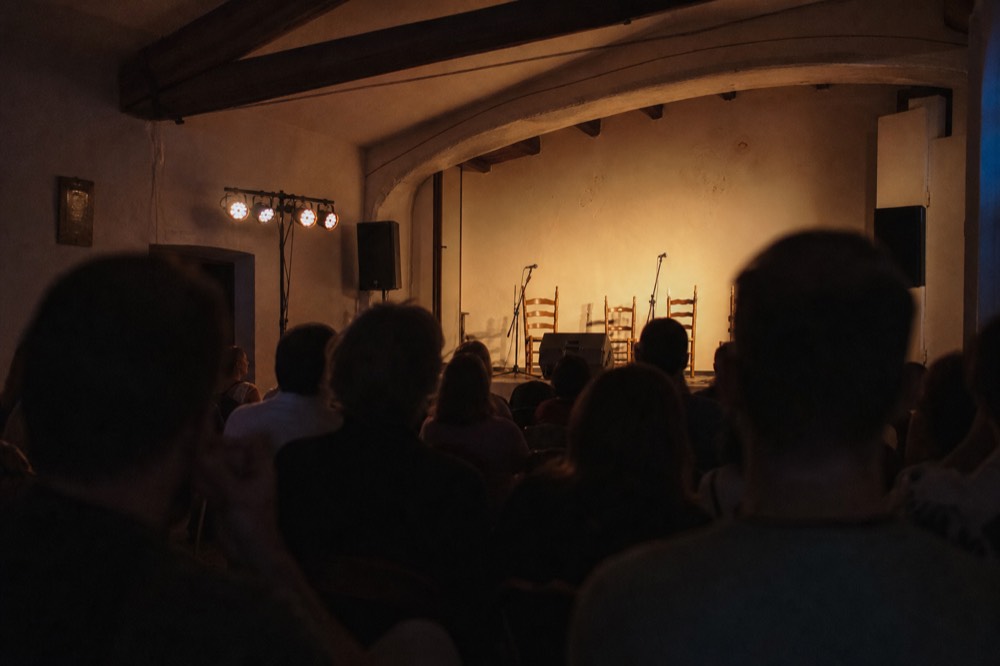
Sitting closer helps more than reading up. In a room of forty people the dancer's breathing is audible, and the cues become obvious within twenty minutes because you can hear the performers prompting each other. In a 200-seat theater those signals are smoothed out by the sound system, which is a fair trade for sightlines and air conditioning, but it makes the jaleo harder to learn from. Casa de la Memoria is the clearest example of the small end, four artists in a fifteenth-century palace with no amplification at all, and since its seats are unnumbered it pays to check which curtain still has space and then turn up early.
Timing of a different kind matters too. Seville dinner runs late, commonly nine to eleven at night, so an early curtain at six or seven leaves the evening intact rather than cutting it in half. Getting home is easy either way: the metro runs to roughly eleven at night from Monday to Thursday and later at weekends, according to the city's transport information, and taxis work around the clock. How a tablao night runs sets out the seating and drink formats in more detail, and whether the hour is worth it tackles the question people ask before booking anything.
Which rooms let you hear the jaleo best?
The small unamplified ones, where nothing separates the shout from your ear. Casa de la Memoria and La Casa del Flamenco both perform without microphones, Baraka in Triana works with four artists and a drink included, and Casa de la Guitarra puts the guitar close enough that you hear the fingernails. Theater rooms trade that intimacy for scale.
| Room | Sound | Cast | From | What that means for the jaleo |
|---|---|---|---|---|
| Casa de la Memoria | No microphones | 4 artists | $29 | Every stamp and shout arrives raw; seats are unnumbered, so arrive early |
| La Casa del Flamenco | No microphones, courtyard | 5 artists | $29 | Voices carry off stone; doors open 20 minutes before |
| Baraka, Triana | Small room | 4 artists | $27 | Close enough to hear the performers cue each other, drink included |
| Casa de la Guitarra | Tight room | Guitar-led | $24 | The toque sits front and centre, string noise included |
| Teatro Flamenco Sevilla | Amplified theater | 6 performers | $29 | Smooth sound and clear sightlines, less audible detail |
Triana is the neighbourhood where this vocabulary is least performed and most spoken, which is one reason the small rooms on that bank are worth the walk across the river. Baraka runs its hour on Calle Pureza with a drink in the price, and it is easy to check availability for the night you are free if a compact room is the version you want.
None of this needs studying in advance. Two rules carry a first visit: do not clap, and do not fill the silence. Everything else you will pick up from the people around you, which is exactly how the vocabulary has always travelled. If you want the historical background to the same tradition, the ban story and the real record clears up the most repeated myth about it, and the city's tablao rooms are listed with their formats and prices side by side.