Why was flamenco banned?
Franco never outlawed flamenco. What the record shows instead, from the 1749 Gitano round-up to the regime's tourist posters, and how it sounds in Seville now.
 By Carmen Ruiz, Seville flamenco show specialist & cultural experience guide
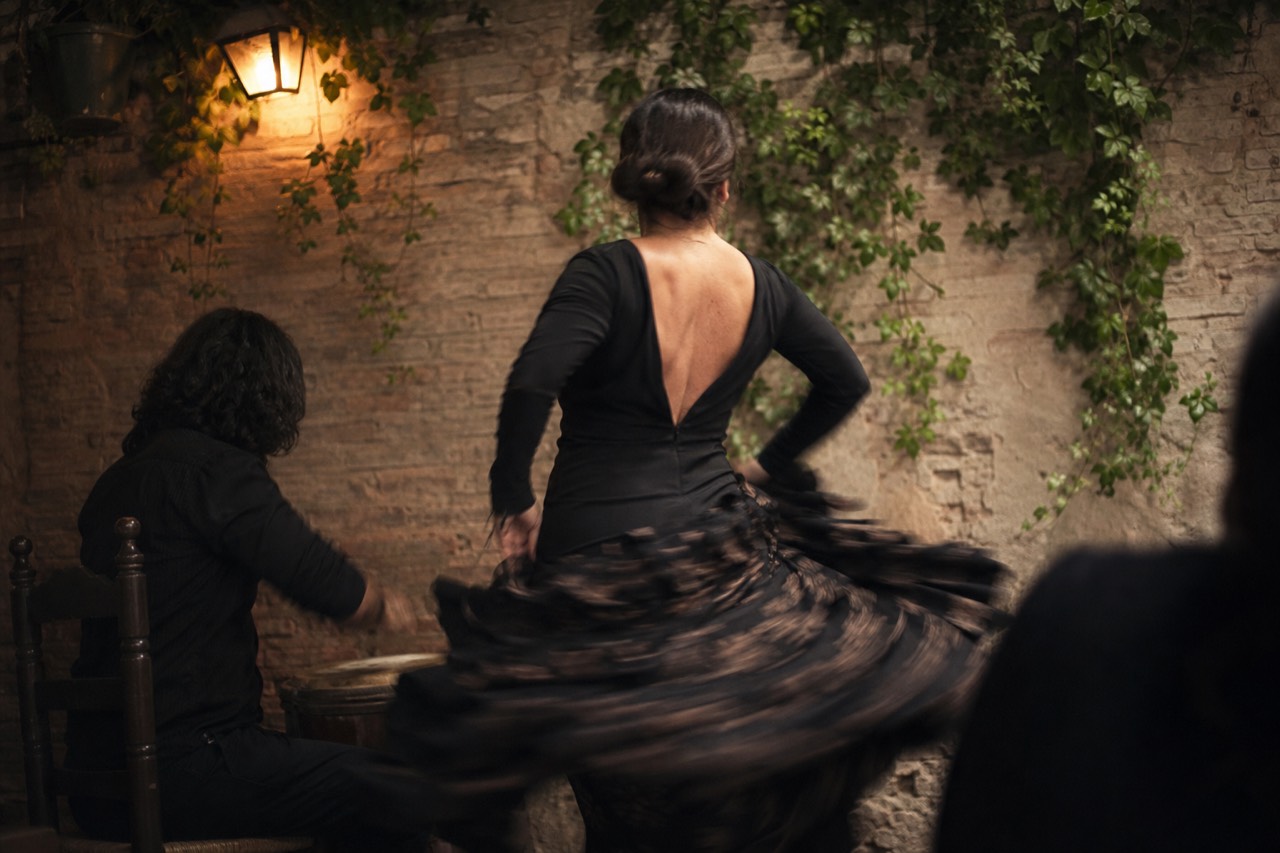
Ask this in a queue outside a tablao and someone will tell you that Franco outlawed flamenco and it survived in cellars. The paperwork says something less romantic. Spain's dictatorship printed flamenco on tourist posters, sent it abroad as the face of the country, and had censors read the lyrics line by line. The state campaign that genuinely set out to erase this culture came two centuries earlier, and it went after a people rather than a music.
Was flamenco banned under Franco?
No blanket ban existed. Across the Franco years, 1939 to 1975, historians describe selective promotion rather than prohibition: the regime pushed flamenco as a national symbol and a tourist draw while censoring artists and lyrics it read as subversive. Public performance thinned in the 1930s and 1940s, mostly through civil war and postwar hunger.
Two things happened at once and only one of them gets remembered. Censorship was real, wide and documented across Spanish music of the period. Prohibition of an entire art form was not. Accounts of what the regime did to Spanish music describe a state that found flamenco useful, especially after 1945, when Spain wanted foreign currency and a friendly image abroad far more than it wanted cultural purity.
What shrank in those decades was the circuit, not the legality. The Civil War emptied rooms, scattered artists and took away the audiences who paid them. Austerity kept them scattered. Cafés that had employed singers closed or became something else entirely. When paid performance picked up again, it picked up in a shape the state approved of, and that is where the real discomfort in this history sits.
Some pressure was local rather than national. Parts of the Church and some fascist organisations objected to particular forms and restricted them where their reach allowed. That is a long way from an outlawed art. Collapsing the two flattens a period that historians have spent decades pulling apart, and it hands the regime a kind of credit it never earned: the credit of having been the enemy of something it was busy selling.
What did the Franco regime actually do to flamenco?
It promoted and policed the same art at the same time. Flamenco was marketed abroad as the image of Spain and used to draw tourist money, while censorship offices vetted lyrics, recordings and performers. Material judged too political, or too openly Arab or Jewish in character, could be blocked. Support and suppression ran in parallel.
The promotion came with a cost that is easy to miss because it looks like success. Flamenco was rebranded as Spanish rather than Andalusian and Gitano, folded into a single national image alongside bullfighting and castanets. A music that had grown inside specific families, streets and neighbourhoods was repackaged as the country's calling card. Artists worked, which mattered. What they were allowed to say about their own history narrowed at the same time.
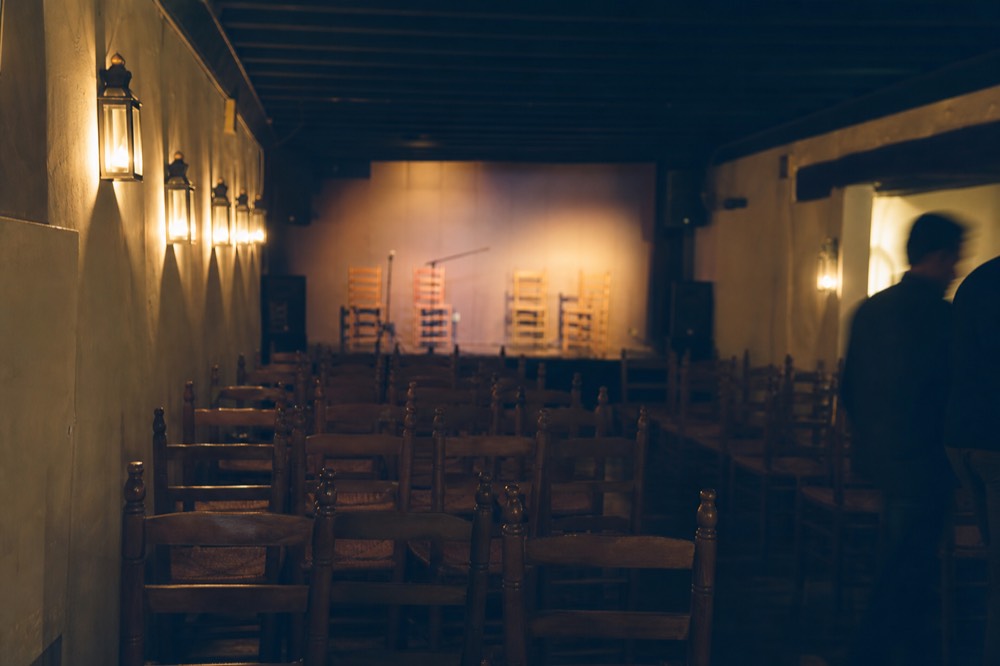
That commercial push is also why the tablao circuit visitors book today looks the way it does. State backing for tablaos and festivals was economic policy as much as culture. Some of those rooms are still trading on their own history: Los Gallos on Plaza Santa Cruz has been running since 1966, inside the exact period the myth describes as silence, and it now puts eight artists on stage, three dancers, three singers and two guitarists, with an International Flamenco Award taken in 2024. If a room with that continuity is the version of the story you want to sit in, check tonight's times and the current price before the early curtain fills.
None of this makes the regime a patron of the art in any honourable sense. It makes it an owner. The distinction matters when you sit down in one of the classic tablao rooms and hear a singer take a verse that once had to pass a censor's desk.
What persecution of Gitano culture is documented?
The hard evidence sits in the eighteenth century. In 1749 the Great Gypsy Round-up, ordered under Ferdinand VI, saw thousands of Gitanos across Spain seized, imprisoned or forcibly relocated. It belonged to a longer run of Pragmatica laws designed to assimilate or expel Romani communities, the same communities in which flamenco later took its recognisable shape.
That is the ban people are half remembering, moved two hundred years forward and stripped of its target. It was not a decree against a musical style. It was an operation against a population, carried out by a state with lists and soldiers, and its consequences ran through generations of the families who later professionalised cante, baile and toque.
Set the record beside the popular version and the gap is obvious.
| Period | What the record shows | What the myth turns it into |
|---|---|---|
| Eighteenth-century Pragmatica laws | Legislation aimed at assimilating or expelling Spain's Romani population | Folded vaguely into "flamenco was always outlawed" |
| 1749 | The Great Gypsy Round-up under Ferdinand VI: thousands of Gitanos across Spain imprisoned or forcibly relocated | Rarely mentioned at all |
| 1930s to 1940s | Public performance dwindles under civil war and postwar austerity | Read backwards as proof of a ban |
| 1939 to 1975 | No blanket ban: promotion as a national symbol and tourist attraction, alongside censorship of subversive material and objections from some church and fascist quarters | "Flamenco was banned and went underground" |
| 2010 | UNESCO inscribes flamenco on the Representative List of the Intangible Cultural Heritage of Humanity | Treated as a marketing badge |
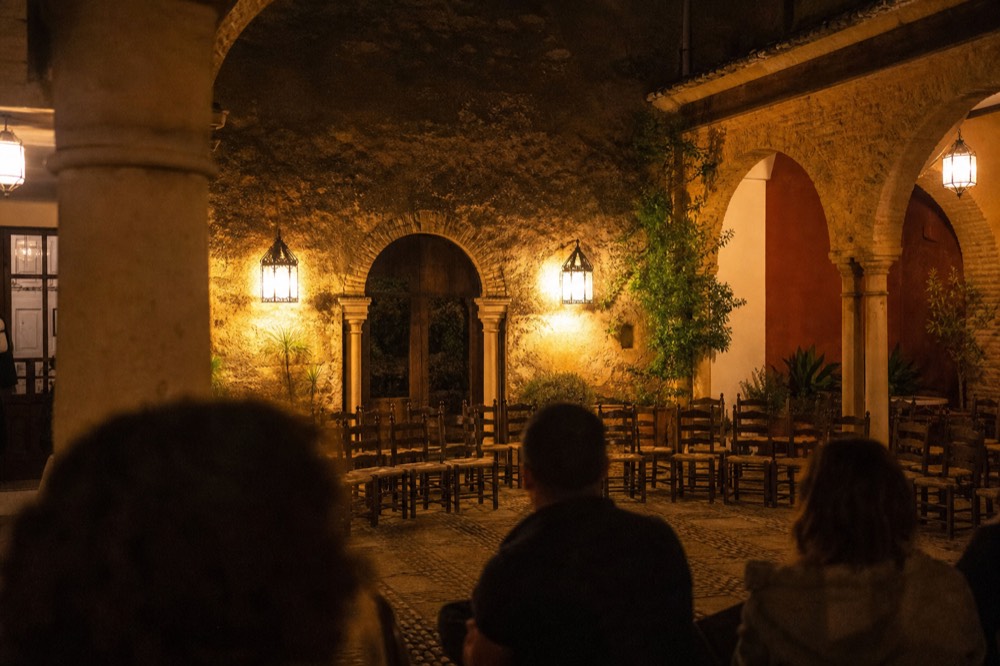
The 2010 inscription is worth reading rather than quoting. The UNESCO listing for flamenco describes an expression built from song, dance and guitar together, transmitted inside families and communities, which is precisely the transmission line those earlier laws tried to break.
Why does the ban story keep spreading?
Because a true story sits underneath it. Persecution happened, censorship happened, and both are easier to tell as one dramatic prohibition than as two centuries of pressure with different targets. The flat version also flatters everybody: the art becomes rebellion, the audience becomes an ally, and the awkward tourist-poster decades disappear.
There is a second reason, and it is about the sound. Cante jondo, the deep song at the centre of the tradition, is modal, unresolved and frequently mournful. Sit through a soleá and the music itself argues that something terrible must have been outlawed. Emotional evidence is persuasive and historically useless, which is how a feeling becomes a fact in a guidebook caption.
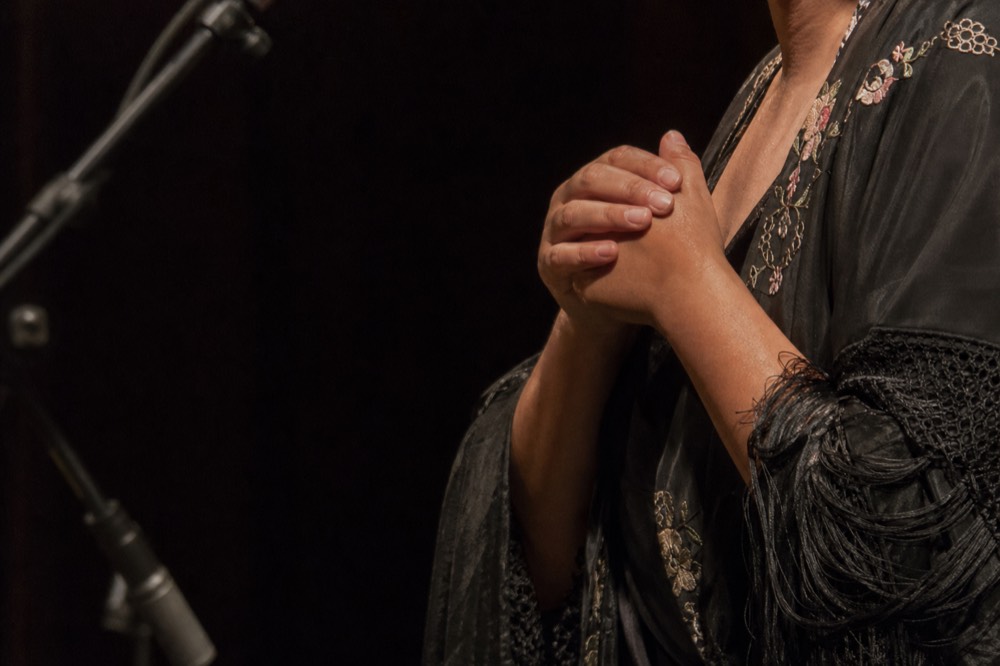
The cost of the simplification falls in one place. Replacing an ethnic persecution with a generic art-hating dictator quietly writes the Gitano families out of their own history, which is a strange result for a story people tell in order to sound respectful. It also erases the more uncomfortable fact that the art was promoted, sold and staged for foreigners by the same regime, and that some of the venue formats travellers now call traditional were shaped in that market. The honest version keeps both halves: state violence in the eighteenth century, state ownership in the twentieth.
Can you hear this history in a room tonight?
Yes, in the format rather than the programme. The oldest surviving conditions are acoustic: a small room, no microphones, a singer close enough that you hear the breath between phrases. Palos such as soleá and the wider cante jondo repertoire carry the sorrowful, modal shape that survived the family transmission those old laws targeted.
Compás, the rhythmic cycle that organises most palos in twelve beats, is the other inheritance. It was learned by ear, in kitchens and patios, long before anyone wrote it down for a syllabus. When a room falls silent for a soleá and then breaks into bulerías, what you are hearing is a system that was passed hand to hand, through exactly the communities the Pragmatica laws set out to dissolve.
The unamplified rooms are the ones that make the point without saying it. Casa de la Memoria works with four artists, two dancers, a singer and a guitarist, inside a fifteenth-century palace with no microphones and unnumbered seats. Its hour sells out often enough that walk-ups get turned away, so check dates and current prices before you build an evening around it. If you want the same acoustic logic in a courtyard, La Casa del Flamenco in Santa Cruz does it with five.
Which Seville rooms sit closest to the older form?
The small unamplified ones, plus the venues that put their money back into teaching. Four rooms in the city fit that description at ordinary ticket prices: Casa de la Memoria, La Casa del Flamenco, Casa de la Guitarra and Teatro Flamenco Triana. None of them is a museum piece, and all four are working stages with professional artists on them.
| Room | Format | Traveller rating | From | Why it fits this history |
|---|---|---|---|---|
| Casa de la Memoria | 1 hour, 4 artists, no microphones, fifteenth-century palace | 4.7 (1,088) | $29 | The volume comes from the room, as it did before amplification |
| La Casa del Flamenco | 1 hour, 5 artists, fifteenth-century courtyard, natural acoustics | 4.7 (687) | $29 | Same acoustic rules, one more voice on stage |
| Casa de la Guitarra | 1 hour in a tight room, historic guitar collection on the walls | 4.7 (426) | $24 | Puts the toque, the guitar line, at the centre |
| Teatro Flamenco Triana | 1 hour, strict no-photography policy, no under-sixes | 4.7 (4,505) | $29 | Profits fund the Cristina Heeren foundation's teaching |
The last row is the one that changes what your ticket does. Teatro Flamenco Triana is a project of the Cristina Heeren Flamenco Art Foundation and returns all profit to flamenco teaching, which puts your money into the transmission chain rather than only into an evening out. It sits in Triana's flamenco streets, on the far bank, in the district that produced many of the families who kept these forms alive. If that appeals, see which curtain times are still open and note the no-photos rule before you go.
For a first visit, the practical question is not which room is most historic but which format suits the night you have. How a tablao evening is structured explains the differences in seating, drinks and running time, and where the music actually came from takes the origins argument apart with the same caution applied here. If your trip lands in September 2026, the city's own festival puts the widest programme of the year on stage, and the Bienal's 2026 edition carries the details as they are confirmed.